

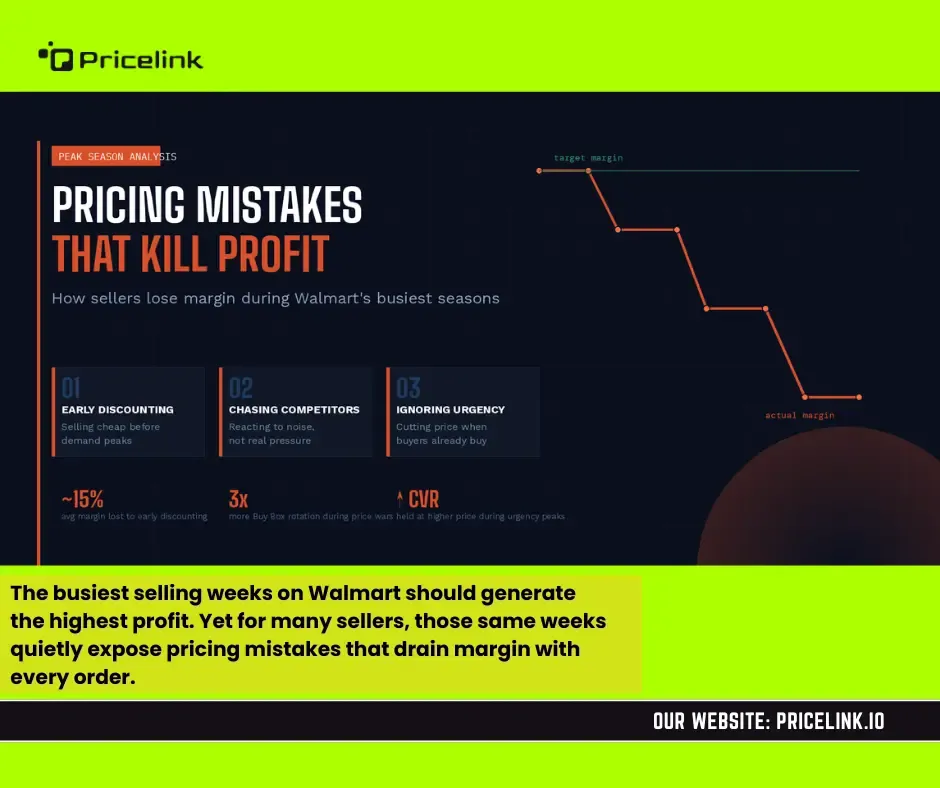
Peak season should be the most profitable time of year for Walmart sellers. Traffic climbs, orders increase, and demand feels like it is working in your favor. But for many sellers, margins quietly shrink during the very weeks that should generate the most profit.
The problem is not demand. The problem is pricing strategy that was not built for high-urgency conditions. Seasonal periods expose every weakness in how sellers price, react to competitors, and read buyer behavior. Understanding the most common seasonal pricing mistakes walmart sellers make is the first step toward protecting profit when it matters most.
Why Walmart Sellers Make Seasonal Pricing Mistakes
Most pricing errors during peak periods do not come from bad intentions. They come from applying the same pricing habits that work during slow months to a completely different buying environment.
Buyer Behavior Shifts During Peak Demand
Seasonal demand changes how shoppers make decisions. During normal periods, buyers compare multiple listings carefully and price sensitivity is high. As urgency increases, that behavior changes significantly.
Buyers searching for gifts, time-sensitive products, or items with limited availability begin prioritizing reliability and fulfillment speed over minor price differences. This shift is examined in detail in how buyer urgency changes Walmart pricing sensitivity, where urgency begins driving decisions more than small price gaps.
Sellers who do not recognize this shift keep discounting when they no longer need to, giving away margin that buyers were already willing to pay.
Elasticity Narrows When Urgency Is High
Price elasticity does not behave the same way during seasonal surges as it does during regular selling periods. When demand is low and buyers are browsing, even small price differences can shift purchase decisions. When urgency is high, the acceptable price range widens considerably.
A seller listing a popular toy at $34.99 during a normal week may feel pressure to drop to $32.99 to stay competitive. During the week before a major holiday, that same buyer may purchase at $36.99 without hesitation because availability matters more than saving two dollars. Understanding how to set pricing guardrails around these elasticity shifts is covered in Walmart price elasticity behavior.
When sellers ignore elasticity changes, they discount into a window where discounting was never necessary.
Competition Becomes Noisier, Not Smarter
Seasonal demand also triggers reactive behavior from competitors. More sellers begin adjusting prices frequently, some without any data-driven reason to do so. This creates pricing noise that can mislead sellers into thinking market pressure is higher than it actually is.
Not every competitor price drop reflects genuine demand pressure. Some sellers lower prices out of anxiety, not strategy. Reacting to every move during peak seasons is one of the fastest ways to destroy margin without gaining any real competitive advantage.
Common Seasonal Pricing Mistakes That Erode Margin
Understanding the specific mistakes that occur during peak demand helps sellers build a more disciplined approach before the next busy period arrives.
Why Discounting Too Early Kills Your Best Window
Early discounting is one of the most damaging seasonal pricing mistakes walmart sellers make. Dropping prices before demand actually peaks means selling at reduced margins during a window when buyers would have paid full price.
Consider a seller who begins lowering prices two weeks before Black Friday in anticipation of competition. Demand is still building, urgency has not yet peaked, and buyers are still in research mode. The seller captures early sales at thin margins, then faces even higher competition during the actual peak window without the margin flexibility to respond.
Historical demand patterns show that urgency builds gradually before reaching its highest point. The timing and preparation strategies behind Walmart's busiest pricing cycles are outlined in seasonal product pricing for Walmart's busy months. Patience during the early build phase often produces significantly stronger overall margins.
How Chasing Competitor Drops Destabilizes Listings
Matching every competitor price drop during peak seasons creates a compounding problem. Each reduction triggers further reactions from other sellers, Buy Box rotation increases, and the listing loses the pricing stability that Walmart's algorithm rewards.
A practical example makes this clear. A seller holds the Buy Box at $27.50. A competitor drops to $26.99. The seller reacts immediately and drops to $26.50. A third seller responds and drops to $25.99. Within 48 hours, the original seller is at $25.00, margins have collapsed, and Buy Box rotation is happening multiple times per day.
The relationship between pricing stability and search visibility is analyzed in detail in how Walmart pricing and ranking interact, where controlled price positioning outperforms reactive discounting for long-term listing health. Buy Box instability during this kind of competitive spiral is one of the core reasons sellers lose visibility at the exact moment demand is highest, a pattern covered in why Walmart sellers lose the Buy Box.
What Happens When Sellers Ignore Urgency Signals
Many sellers continue pricing as if shoppers are still carefully comparing options, even when demand signals show urgency has already shifted. This results in unnecessary price reductions that do not improve conversion because buyers had already moved past price-sensitivity mode.
A home goods seller running a space heater listing during a cold weather spike may see conversion holding steady at $44.99. Assuming competition is the reason for any slowdown, they drop to $41.99. Conversion does not improve because urgency was already driving the purchase decision. The price drop simply reduced profit on every sale made during the most valuable window of the season.
According to data from Marketplace Pulse, seller behavior during peak seasons on major marketplaces consistently shows that reactive pricing leads to margin compression without proportional sales volume gains. Recognizing urgency signals before making any price move prevents this outcome entirely.
How To Use Data To Avoid Seasonal Pricing Mistakes
Seasonal pricing decisions should never rely on instinct or emotional reaction to competitor movement. Data provides the foundation for disciplined adjustments that protect both visibility and profitability.
How Product Analytics Reveals the Right Pricing Window
Understanding when demand strength actually supports higher price levels requires historical performance data, not guesswork. Reviewing past sales cycles shows exactly when urgency peaks and when buyers begin shifting back to research mode.
PriceLink's Product Analytics gives sellers visibility into how pricing changes have affected conversion performance over time. This allows sellers to identify the optimal pricing window for each seasonal product rather than applying a blanket discount strategy across all listings.
How Competitor Tracking Separates Noise From Real Pressure
Not every price movement in the market represents genuine demand pressure. Competitor Tracking allows sellers to monitor whether price drops are coming from stable, high-volume sellers or from reactive smaller sellers without significant Buy Box history.
When the data shows that only low-volume competitors are dropping prices while established sellers hold steady, there is no rational basis for reacting. Responding only to meaningful competitive pressure rather than market noise is what separates disciplined operators from reactive sellers during peak seasons.
Why Timing Adjustments Matter More Than Price Depth
The single most valuable pricing decision during peak seasons is often not how far to move the price but when to move it. A 3% price increase timed correctly during a high-urgency window can generate more margin improvement than a 10% discount applied at the wrong stage of the demand cycle.
Walmart's official Marketplace Performance Standards reinforce that competitive pricing must be balanced with strong seller metrics for optimal placement. Timing adjustments to align with genuine demand peaks rather than anticipated competition supports both margin protection and ranking stability simultaneously.
Building A Seasonal Pricing Strategy That Protects Profit
Avoiding seasonal pricing mistakes requires a framework built before peak demand arrives, not reactive decisions made during it.
How To Identify Your True Demand Peak
Every product category has a specific urgency window where buyer behavior shifts from comparison to purchase. Identifying that window in advance allows sellers to hold pricing through the early build phase and capitalize during the actual peak rather than discounting into it prematurely.
Reviewing year-over-year sales data, monitoring search volume trends for primary keywords, and tracking competitor inventory levels in the weeks leading up to seasonal events all contribute to a clearer picture of when demand actually peaks for specific product types.
How To Set Price Floors Before The Season Starts
Establishing minimum acceptable price thresholds for each SKU before seasonal demand begins prevents emotional decisions during high-pressure moments. A seller who has already defined that a listing will not go below $28.00 regardless of competitor activity is protected from the spiral that destroys margin during peak periods.
These price floors should account for seasonal cost changes including shipping delays, inventory costs, and fulfillment pressures that often increase during high-demand periods. Building those variables into floor calculations ensures the floor actually protects profitability rather than simply limiting how far discounting goes.
How To Monitor And Respond Without Overreacting
Real-time monitoring during peak seasons is valuable only when combined with clear response criteria. Checking competitor prices every hour without defined rules for when and how to respond creates anxiety-driven decisions rather than strategic ones.
Defining specific conditions that trigger a pricing review, such as losing Buy Box ownership for more than 24 hours or a primary competitor dropping below a certain threshold, creates a structured response process. This prevents overreaction to short-term noise while ensuring genuine competitive pressure receives a timely, data-backed response.
Final Takeaway
Seasonal demand creates the biggest profit opportunities of the year, but only for sellers who price with discipline rather than reaction. Discounting too early, chasing every competitor move, and ignoring urgency signals are the three patterns that consistently erode margin during the exact periods that should generate the most profit.
Understanding how demand, elasticity, and buyer urgency interact during peak seasons allows sellers to hold pricing longer, respond to real pressure rather than noise, and protect margins when they matter most. The sellers who build their seasonal pricing strategy on data before demand peaks arrive are the ones who finish each busy period with stronger profitability than they started with. PriceLink's Product Analytics and Competitor Tracking provide the foundation for making those decisions with confidence rather than guesswork.