
Most Walmart sellers reprice reactively. A competitor drops price, demand spikes, or inventory moves faster than expected, and pricing changes follow without a plan. Over time, this behavior erodes margin and destabilizes rankings. A strong walmart repricing strategy is not about reacting faster. It is about setting guardrails that control how far and how often prices move.
This guide explains how to set repricing guardrails that protect Walmart rankings, maintain Buy Box eligibility, and prevent profit leakage during competitive shifts.
What Repricing Guardrails Mean on Walmart
Repricing guardrails define acceptable pricing boundaries before changes happen. They prevent sudden swings that confuse buyers and algorithms.
Why Uncontrolled Repricing Hurts Rankings
Frequent or aggressive price changes signal instability. Walmart search and Buy Box systems reward predictability. Listings that swing prices too often lose trust signals, even when prices drop.
Guardrails reduce volatility by limiting how pricing reacts to competitors and demand shifts.
How Guardrails Differ From Static Pricing
Static pricing ignores market changes. Guardrails allow flexibility within controlled ranges. This balance keeps listings competitive without sacrificing margin or ranking stability.
Setting Price Floors That Protect Margin
The first guardrail every seller needs is a price floor.
To calculate reliable price floors, sellers need visibility into true performance, not just costs. This is where PriceLink Product Analytics becomes useful, allowing sellers to evaluate pricing impact alongside conversion, demand strength, and historical performance instead of relying on static spreadsheets.
How to Calculate a Safe Price Floor
A price floor should account for product cost, fulfillment, Walmart fees, and desired margin. Dropping below this threshold rarely leads to sustainable growth.
Product Analytics helps sellers model these thresholds using real performance data instead of assumptions.
Why Price Floors Support Ranking Stability
Listings that repeatedly hit unsustainable lows often struggle to recover. Walmart favors sellers that maintain consistent pricing behavior over time.
Defining Price Ceilings Without Killing Conversion
Price ceilings prevent sellers from overpricing during demand spikes.
When Price Increases Become Risky
Raising prices too aggressively can reduce conversion and visibility. The goal is to capture demand without triggering buyer resistance.
Seasonal behavior discussed in 12 Seasonal Triggers That Tell You It’s Time to Reprice shows why timing matters as much as price level.
Using Demand Signals to Adjust Ceilings
Ceilings should move with demand strength. Stable conversion during higher prices signals room for gradual increases.
Guardrails Based on Competitor Behavior
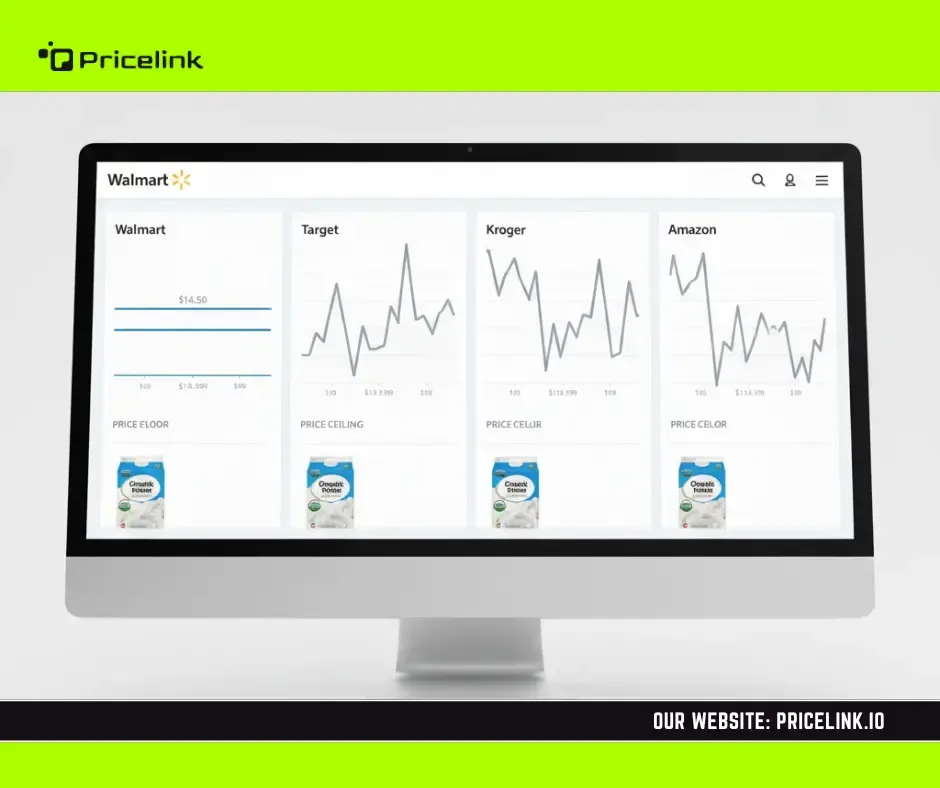
Competitors influence pricing, but they should not dictate it blindly.
Monitoring competitor behavior at scale requires more than spot checks. With PriceLink Competitor Tracking, sellers can observe pricing patterns, stock changes, and competitive movement over time, making it easier to respond with controlled guardrails instead of emotional repricing.
Which Competitor Moves Matter and Which Do Not
Not every price drop is meaningful. Temporary discounts, clearance behavior, or low-stock sellers often create false signals.
Competitor Tracking helps sellers separate real competitive pressure from noise by analyzing patterns over time.
Preventing Price Wars Through Controlled Responses
Guardrails limit how much a listing responds to competitor price changes. This prevents cascading price wars that damage the entire category.
How Guardrails Protect Buy Box and Search Rankings
Repricing guardrails influence more than profit.
Why Stability Improves Buy Box Eligibility
Walmart Buy Box systems favor sellers with predictable pricing and fulfillment. Sudden swings can reduce Buy Box presence even when prices are low.
This behavior aligns with insights from Price Elasticity on Walmart: Set Guardrails Before You Reprice, where stability often outperforms aggressive discounting.
How Guardrails Reduce Ranking Volatility
Listings with controlled pricing changes experience fewer ranking drops during competitive shifts. This consistency supports long-term visibility.
Common Guardrail Mistakes Sellers Make
Some sellers set guardrails too tight, missing demand opportunities. Others set them too wide, allowing damaging swings. Guardrails should evolve as categories mature and competition changes.
Turning data into decisions requires clarity. This is where sellers rely on actionable insights that turn pricing data into strategy instead of reacting emotionally to short-term changes.
External Perspective on Pricing Stability
Pricing stability is not unique to Walmart. Research from McKinsey & Company shows that modern consumers value reliability and consistency as much as price, especially during high-demand periods. These preferences directly influence conversion and platform trust signals.
FAQs About Walmart Repricing Strategy
What Is a Walmart Repricing Strategy
A walmart repricing strategy defines how and when prices change to remain competitive while protecting margin and rankings.
How Often Should Walmart Sellers Reprice
Most sellers review pricing weekly, with closer monitoring during seasonal demand shifts.
Do Repricing Guardrails Limit Growth
No. Guardrails enable controlled growth by preventing unstable pricing decisions that hurt performance.
Conclusion
A successful walmart repricing strategy is built on guardrails, not reflexes. Sellers who define price floors, ceilings, and competitor response limits protect both margin and rankings. Repricing becomes a controlled system rather than a reaction. With the right data and discipline, guardrails turn pricing into a long-term advantage instead of a recurring risk.