

If you want to grow on Walmart, you cannot ignore Walmart competitor tracking. Prices, stock levels, and Buy Box winners change all the time, often in small steps that quietly hurt your sales. Top sellers treat competitor tracking as a daily habit, not a one-time fix. In this guide, you will see how they do it and how tools like PriceLink make those habits easier to follow every day.
Why Walmart Competitor Tracking Matters
Walmart shoppers compare options fast. If a rival seller undercuts your price, improves their content, or wins the Buy Box, your listing can lose clicks without warning. Walmart competitor tracking helps you see these moves early instead of guessing why sales dropped. When you track rivals in a structured way, your pricing, product mix, and reactions become more strategic.
Common Mistakes Sellers Make With Competitors
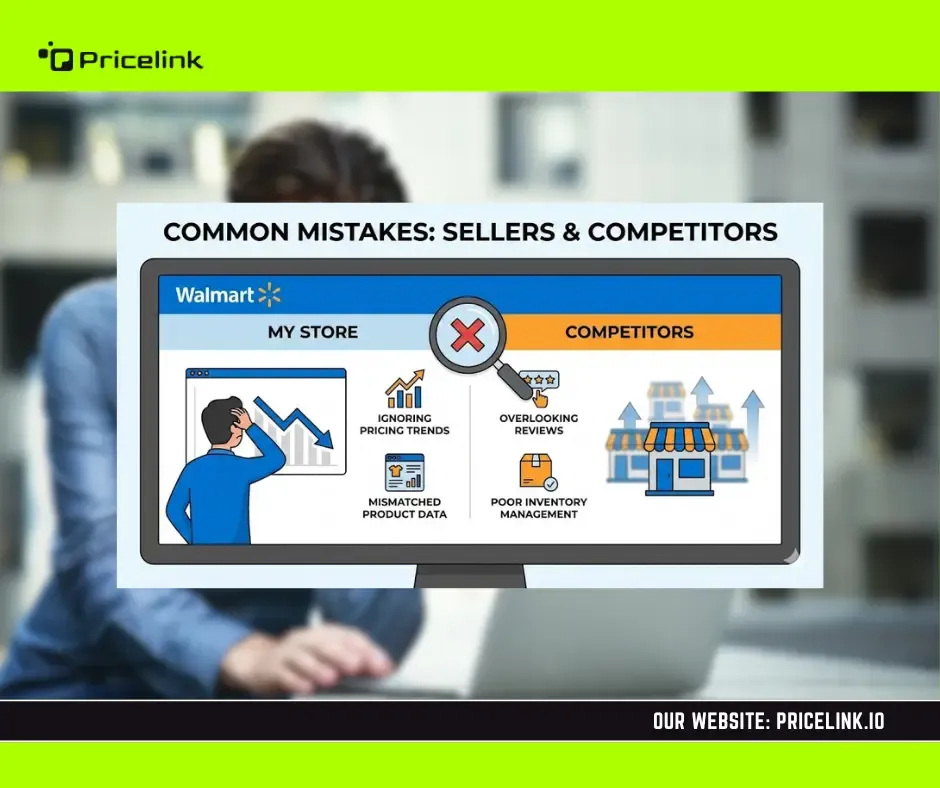
Many sellers only check competitors when something goes wrong. They wait until sales slow, then open a few product pages and look at prices manually. This reactive style gives competitors a head start. Strong Walmart competitor tracking means watching patterns every day, not just when panic starts. With PriceLink Walmart Tools, you can see competitor pricing, stock trends, and performance signals inside a single view instead of scattered tabs.
For deeper insight, read the Tips for Finding Low-Competition Walmart Products blog.
Signals You Should Monitor Every Day
Top sellers know which signals matter most when doing Walmart competitor tracking. They check current price, recent price changes, stock levels, Buy Box owner, shipping times, and rating trends. They also watch how often a competitor changes price because that hints at pricing rules or tools. Over time, these signals show which rivals are serious and which ones are unstable.
For deeper insight, read the The Truth About Price Monitoring blog.
How Top Sellers Track Competitors On Walmart
Top Walmart sellers build routines around Walmart competitor tracking. They do not rely on memory or random checks. Instead, they combine daily scans, saved product lists, and clear rules for how they respond to changes. This turns noisy data into a simple daily workflow.
Daily Pricing And Stock Check Habits
A common habit is to review a focused list of key SKUs every morning. Sellers look at their own price, the lowest competing price, and who currently holds the Buy Box. They also note stock changes, new sellers entering the listing, and sudden price drops that could signal clearance. PriceLink’s Competitor Tracking and Product Analytics let you scan these details quickly, then mark which products need action.
For deeper insight, read the Dynamic Pricing: Everything You Need to Know in 2026 blog.
How Sellers React To Competitor Changes
The best sellers do not change price every time a competitor moves. Instead, they decide when to match, when to hold, and when to exit. They consider profit, Buy Box behavior, and long term trends. If a rival dumps stock at a loss, they may wait it out. If a stable rival tightens their price range, they may adjust closer. Strong Walmart competitor tracking gives them the confidence to act with intent instead of fear.
For deeper insight, read the Walmart Buy Box Winners: Why You’re Losing and How to Fix It.
How To Use PriceLink For Competitor Tracking
PriceLink was built to remove guesswork from Walmart competitor tracking. Instead of jumping between product pages and spreadsheets, you can see competitor prices, stock, and trends in one place. Powerful Features Designed for Walmart Sellers turn raw data into clear signals you can act on quickly.
Using The Chrome Extension While Browsing
Many top sellers start their Walmart competitor tracking right inside search results. With the PriceLink Chrome Extension, you can view estimated margins, competitor counts, and pricing patterns without leaving Walmart. As you scroll, you are not just browsing. You are building a live map of which listings are crowded, which have weak competition, and where your offer can stand out.
For deeper insight, read the Best Chrome Extension for Walmart Product Research blog.
Building Dashboards For Fast Decisions
Advanced sellers build dashboards that highlight their most important competitor battles. Instead of looking at every product, they focus on SKUs with high revenue, tight margins, or aggressive rivals. PriceLink Product Analytics and Competitor Tracking help you build these views so you can see price gaps, Buy Box trends, and risk points in seconds. Some teams even connect this data through the PriceLink API so they can trigger alerts or workflows automatically.
For deeper insight, read the Tips for Finding Low-Competition Walmart Products blog.
Turn Competitor Data Into Smarter Strategy
Tracking competitors is only useful if it changes what you do. The best sellers combine Walmart competitor tracking with pricing rules, content updates, and assortment changes. They do not chase every move. They focus on actions that protect profit and long term positioning.
Protecting Margins While Competing
It is tempting to always be the cheapest seller, but that often destroys profit. Top sellers decide their minimum margin and use Walmart competitor tracking to stay ahead without going below that floor. They use insights from tools like PriceLink to spot races to the bottom and step aside when needed. Research on algorithmic pricing shows that smart pricing systems focus on profit optimization, not just matching the lowest price every time. You can see this principle explained clearly in the Algorithmic pricing article.
For deeper insight, read the Dynamic Pricing: Everything You Need to Know in 2026 blog.
Choosing Which Battles Actually Matter
Not every competitor is worth tracking closely. Top sellers focus on the rivals who consistently win the Buy Box, move volume, and influence price anchors in the category. With Walmart competitor tracking inside PriceLink, you can filter noise and focus on serious threats. This makes it easier to build a strategy that aligns with your goals instead of reacting to every new seller that appears.
For deeper insight, read the Walmart Buy Box Winners: Why You’re Losing and How to Fix It blog.
Where PriceLink Fits In Your Daily Workflow
For many teams, PriceLink becomes the morning and end-of-day control panel. Sellers start by scanning Walmart competitor tracking dashboards, then mark which products need a price review, a content update, or deeper research. During the day, the Chrome Extension supports quick checks as they browse new categories or test new offers.
You can explore these workflows on the PriceLink Walmart Tools page, which shows how Product Analytics, Competitor Tracking, Keyword Optimization, and the Chrome Extension work together. When you are ready to scale this into a repeatable habit, compare options on the PriceLink Pricing Plans page so you can start your free 7-day trial. If you work with custom systems or internal tools, the PriceLink API helps you pull data into your own dashboards while staying aligned with PriceLink Terms.
FAQs About Walmart Competitor Tracking
Why Is Walmart Competitor Tracking So Important
Walmart competitor tracking is important because it shows how other sellers change price, stock, and offers in real time. Without this view, you react too late and lose clicks, Buy Box share, and profit.
How Often Should I Track Walmart Competitors
Top sellers review key competitors daily. Some also set up alerts and dashboards so they can see big changes as they happen. With tools like PriceLink, daily Walmart competitor tracking becomes faster and easier to repeat.
What Data Matters Most When Tracking Competitors
The most important data points in Walmart competitor tracking are price, stock levels, Buy Box ownership, shipping options, content quality, and review trends. Together, these signals show how strong each rival really is.
Can Small Sellers Benefit From Competitor Tracking
Yes. Small sellers often benefit even more because Walmart competitor tracking helps them avoid bad battles and focus on winnable opportunities. It prevents wasted time on products where bigger players dominate.
Conclusion
The top Walmart sellers do not guess what competitors are doing. They use Walmart competitor tracking as a daily habit, supported by clear data and simple workflows. By checking key signals, reacting with intent, and using tools like PriceLink Walmart Tools, you can protect your margins and stay ahead of sudden market shifts. If you build these habits now, your decisions in 2026 will feel calmer, faster, and far more profitable.