

Most Walmart sellers still optimize listings around a single keyword. That approach no longer works. Walmart search now evaluates relevance across multiple related terms, attributes, and buyer intent signals. Without a structured keyword cluster, listings struggle to maintain visibility even when demand exists.
This guide explains how to build a keyword cluster for any Walmart category, why clustering matters for ranking stability, and how sellers can use data to scale visibility without keyword stuffing.
What a Keyword Cluster Means on Walmart
Keyword clustering groups related search terms around one product instead of targeting a single phrase. Walmart search uses this structure to understand context, relevance, and intent.
Why Single-Keyword Targeting Fails
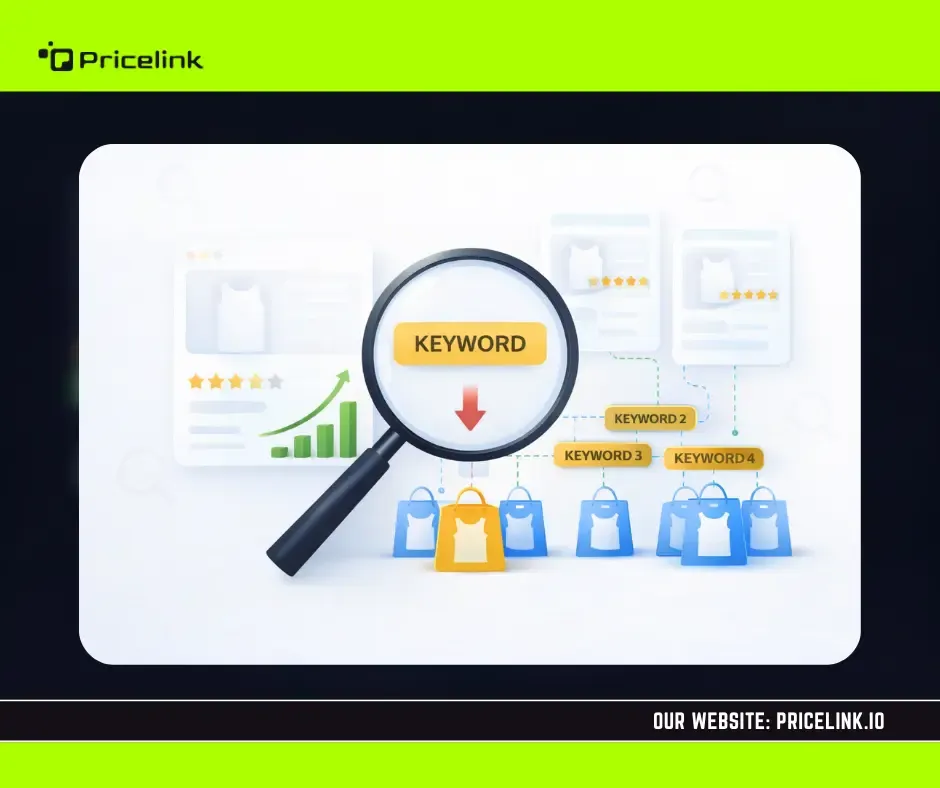
When a listing targets only one keyword, it becomes fragile. Ranking depends on a narrow signal that can disappear as competition increases or buyer behavior shifts.
Clusters protect visibility by allowing your listing to rank across multiple related searches instead of relying on one term.
How Walmart Interprets Keyword Relationships
Walmart evaluates how keywords relate to product attributes, category placement, and buyer filters. Listings that reflect natural keyword relationships appear more trustworthy to the algorithm.
This is why sellers who rely on isolated keywords often lose impressions over time.
How to Identify Core and Supporting Keywords
A strong cluster starts with one core keyword supported by related phrases that reflect buyer intent, use cases, and variations.
Choosing the Core Keyword
Your core keyword should describe the product clearly and match how buyers search most often. It anchors the cluster and guides the rest of the optimization.
Many sellers uncover stronger core keywords by reviewing category-level data instead of guessing based on search volume alone. Studying how products perform within a category reveals which terms Walmart already associates with buyer intent and conversion behavior.
This strategy aligns closely with insights from How to Track Walmart Sales and Demand Trends, where category-level performance signals guide smarter keyword decisions. It also complements the analysis in Dynamic Pricing: A Complete Guide for Walmart Sellers, which explains how demand shifts influence visibility and ranking stability.
According to Walmart Marketplace’s official seller guidance, accurate category placement and complete attribute data directly affect how listings surface in search results, reinforcing the importance of category-driven keyword research.
Finding Supporting Keywords That Matter
Supporting keywords include variations, attributes, and intent-based phrases buyers use before purchasing. These keywords expand reach without diluting relevance.
This approach aligns closely with strategies discussed in Tips for Finding Low-Competition Walmart Products, where demand exists but keyword coverage is weak.
Keyword Optimization helps sellers identify these relationships instead of chasing raw search volume.
How to Structure a Keyword Cluster Inside a Listing
Once keywords are selected, structure determines whether the cluster actually works.
Where to Place Keywords Naturally
Core keywords belong in the title and primary attributes. Supporting keywords fit into secondary attributes, descriptions, and backend fields.
When keywords appear in logical locations, Walmart can map relevance without penalizing over-optimization.
Avoiding Keyword Stuffing While Expanding Coverage
Stuffing keywords weakens trust signals and reduces conversion. Clusters work because they mirror how buyers search, not because they force repetition.
Product Analytics helps sellers measure which keywords drive impressions and which contribute to conversion, allowing refinement over time.
How Keyword Clusters Improve Long-Term Visibility
Clusters do more than boost ranking. They stabilize it.
Why Clusters Protect Against Ranking Drops
As search behavior changes, listings with clusters adapt more easily. They remain relevant even when individual keywords fluctuate.
This is why sellers using clusters experience fewer sudden drops compared to single-keyword listings.
Measuring Cluster Performance Over Time
Performance should be evaluated at the cluster level, not per keyword. Tracking impressions, clicks, and conversions across related terms reveals which clusters deserve expansion.
Using PriceLink Walmart Tools allows sellers to monitor keyword behavior, category movement, and competitor positioning in one place.
Common Mistakes Sellers Make With Keyword Clustering
One common mistake is building clusters too broad. Another is ignoring category-specific language Walmart expects. Both weaken relevance.
Clusters should stay tightly aligned to the product and category, not generic search volume goals.
FAQs About Walmart Keyword Research
What Is a Keyword Cluster on Walmart
A keyword cluster is a group of related search terms optimized together to improve relevance and ranking stability.
How Many Keywords Should a Cluster Include
Most effective clusters include one core keyword and five to ten supporting terms, depending on category complexity.
Do Keyword Clusters Replace Single Keyword Optimization
No. Clusters expand single keyword optimization rather than replace it. The core keyword still anchors the listing.
Conclusion
Keyword clusters are no longer optional for Walmart sellers. Listings built around clusters gain broader visibility, stronger relevance, and better ranking stability. By understanding buyer intent and structuring keywords correctly, sellers can move beyond fragile single-keyword strategies. With the right data and tools, keyword clustering becomes a repeatable system for long-term growth.